Dark Romance for Beginners: 10 Books to Start With (and Why)
Where to start without getting thrown off the cliff. Ten gateway picks, ordered gentle to deep, with the consent thread visible.
Dark romance discourse on BookTok is a contact sport. Someone asks where to start and gets thirty replies, half of them yelling about Haunting Adeline and the other half telling them to read Twisted Love first or absolutely not at all.
I've watched these threads spiral in the past month. The asker disappears. Nobody starts.
So here's the actual list.
Ten dark romance books for beginners, ordered gentle to deep. Each one passes the same beginner-criteria: the heroine has agency (she's not a passive trauma sponge), the consent thread is visible (transgression signaled, not blurred), the intensity scales without trapping you in extreme content, and the book is findable on a normal bookstore shelf or in your subscription.
#1 is the soft landing. #10 is the deep end you're ready for after the other nine.
Each entry tells you what flavor of dark romance it is (mafia, billionaire, mythology, dark academia, stalker) and why this particular book is the safe-ish version of that flavor.
The "and why" is the point. A list of dark romance books without the why is not a beginner list. It's a dare.
---

Twisted LoveAna Huang
The billionaire grumpy-sunshine that BookTok handed to a generation of new dark-romance readers. Alex is the closed-off best-friend's-brother who manages his obsession through control. Ava is the sunny half who refuses to be small for him. The dynamic is technically possessive but the violence dial is low and the contemporary setting is everyday.
This is the lowest-barrier dark romance on the shelf. If you're coming from contemporary romance and want to dip a toe, Ana Huang built the bridge. "Dark" here means brooding-billionaire and emotional unavailability, not anything you'd lose sleep over.
Start here if the genre still feels uncertain. Your nervous system will be fine.
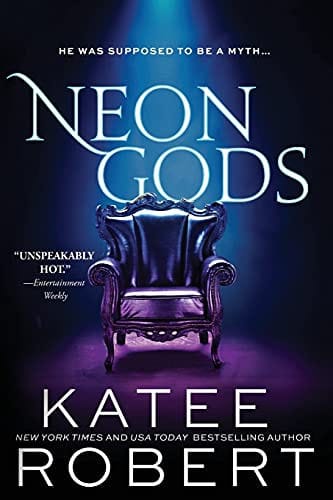
Neon GodsKatee Robert
The Hades-Persephone retelling that lets the mythology do the heavy lifting. Persephone runs to Hades to escape Zeus's arranged marriage. Hades runs Olympus's underground. The book is generous with heat and tightly contained: single PoV, single arc, no multi-book hostage.
Mythology is the perfect entry-frame for dark romance because it gives you permission. You're not reading about "real" violence; you're reading about gods. The remove makes the dynamics easier to sit with.
If you're a fantasy reader curious about dark romance, this is your bridge. Recognizable architecture, unfamiliar intensity.
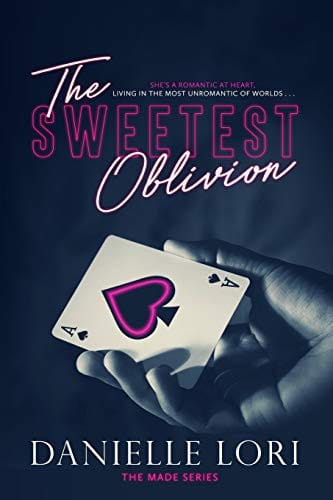
The Sweetest OblivionDanielle Lori
The accessible-mafia entry. Elena is the dutiful daughter of a New York don. Nico Russo is the upcoming Sicilian boss she's arranged-married into. The book is slow-burn for dark romance: slow enough that beginners don't get whiplash, fast enough that the genre's pulse is still present.
What makes this beginner-friendly: the violence is mostly off-page. The mafia world is sketched, not lived-in. Elena's interiority gets the focus, and her agency is real: she pushes back. The heat builds.
If "mafia" is the flavor you're curious about, start here, not with the harder entries below.
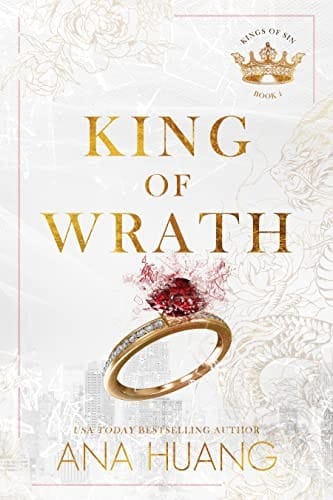
King of WrathAna Huang
The arranged-marriage entry. Vivian is the heiress contracted into marriage with Dante, a CEO with rules and a glacial center. Neither chose this. Both signed.
What makes arranged marriage the perfect beginner-trope for dark romance: the consent thread is built into the premise. The contract exists before the chemistry does. When intensity arrives, it arrives inside a structure both characters have agreed to. That's not a small architectural detail. It's the whole reason this trope reads beginner-safe even when the heat goes up.
Same Huang voice as #1, different trope on the spine. If #1 confirmed you like contemporary-dark-romance-lite, #4 confirms you like Huang's whole tier. These two are your safety net while you scale up.
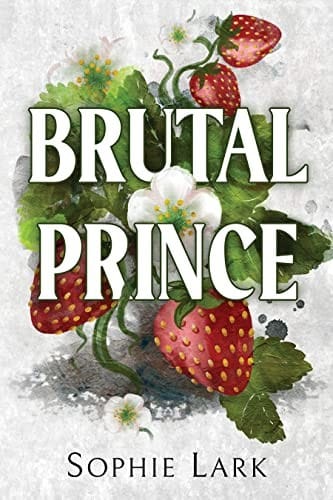
Brutal PrinceSophie Lark
The mafia-meets-politics entry. Aida Gallo is the youngest daughter of Chicago's Italian crime family. Callum Griffin is the Irish son of a political dynasty. Arranged-marriage-as-peace-treaty. Both characters have backbone, both negotiate, both find lust where there should be only contempt.
Sophie Lark's prose is brisk and her mafia world feels lived-in without becoming gory. The political angle gives you something to hold onto if the mob aesthetic feels alien: these are powerful families negotiating, not just shooting.
The mafia-romance lineage has its own essay, and Brutal Prince is exactly where it lands for beginners: mid-intensity, full propulsion.
Dark romance without the why is not a beginner list. It's a dare.
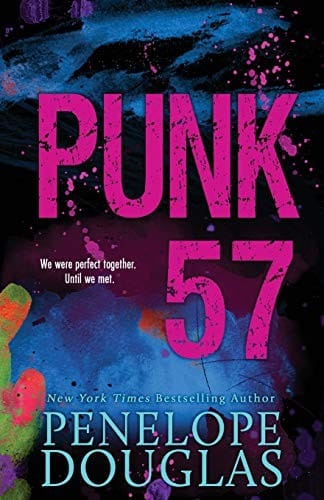
Punk 57Penelope Douglas
Two kids write letters to each other since elementary school. Neither knows the other's name. They end up at the same high school. One of them figures it out first.
Penelope Douglas takes the anonymous-pen-pal trope and lets the obsession turn. Misha plays Ryen for half the book before she catches on. The reader knows the whole time. The tension is the gap between those two states.
What makes this beginner-friendly: the stalker dynamic is contained inside school halls, not a remote cabin. The premise is high-trope but the violence is psychological, not physical. The consent thread is visibly tense the whole time.
If you want a taste of the obsessive-hero archetype without committing to a six-book mafia dynasty, Penelope Douglas wrote it standalone.
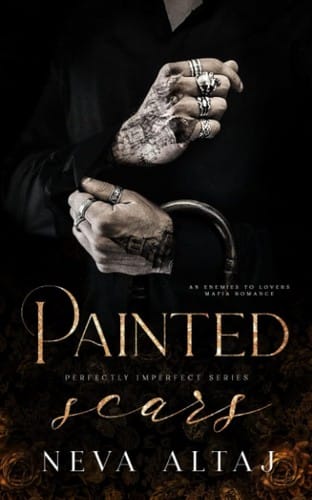
Painted ScarsNeva Altaj
The captive-recovery mafia. Nina is mute, traumatized from a kidnapping years prior. Roman Petrov is the Russian mafia boss who finds her and takes her home. The book is about her recovering speech, her recovering herself, and the slow shift from protector to something more.
The reason this works for beginners despite a heavier premise: Nina is the protagonist, not the object. Her interiority drives the narrative. Her agency expands across the arc. Roman's possessiveness is real but it lands on someone with a developing voice, not on someone being silenced further.
Read this if you want the mafia mid-tier with deeper trauma-recovery beats. Skip if the captive premise is a hard no: it's signaled clearly on page one.
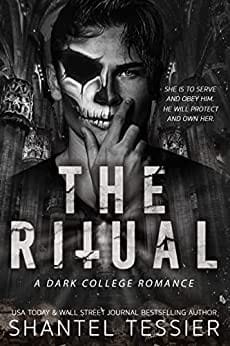
The RitualShantel Tessier
The dark-academia entry. Aria gets caught up in the Lords, a secret society at a private college where each Lord gets a sacrifice for one year. Ryat is the Lord she's tied to. The setting is American-Ivy-League-with-cult-overlay; the dynamic is dark-academia plus possessive-hero plus contract.
Why beginner-OK: the contract framing makes the consent thread legible. There are rules. Both characters know the rules. The transgression happens inside a structure both have agreed to, not outside it. That's a meaningful distinction for someone learning the genre's grammar.
The Lords series goes longer if you want more. The Ritual stands on its own.
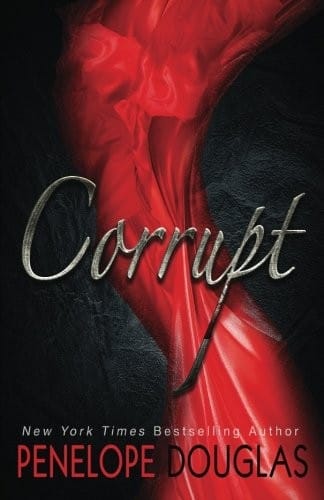
CorruptPenelope Douglas
The revenge entry, organized around a tradition. Devil's Night is the annual ritual the Horsemen — Michael, Damon, Kai, Will — celebrate together: one night a year, one target, no rules. Erika has been writing to Michael while he served three years in prison. He's home now. The welcome he's planning is not the one she imagined.
What makes Devil's Night a craft device, not a gimmick: it gives the revenge an architecture. There's a date. There's a fraternity (the four of them know what they're doing). There's an ending — the night ends — so the violence is bounded by structure. Douglas built four books inside that same calendar.
The intensity steps up here. Where Brutal Prince and Painted Scars stay mid-range, Corrupt commits harder to the possessive-revenge dynamic. Multiple POVs, group dynamics, longer arc.
This is the point on the list where you stop testing the water and step in. Devil's Night #1: three more if you binge.
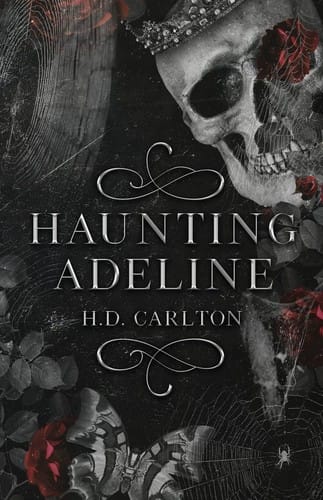
Haunting AdelineH.D. Carlton
The graduation pick. Adeline inherits her grandmother's house and acquires a stalker, Zade Meadows, who is also hunting traffickers in his day job. The premise contains scenes of violence and dub-con that are intentionally hard to read. The author labels them. The author warns you. This is not a book to wander into.
Why it lands here on the list and not earlier: by the time you've read 1-9, you've learned the genre's contract. That intensity in fiction is not a recommendation of intensity in reality. That consent in dark romance is a craft variable not a moral one. That you can put a book down. Haunting Adeline assumes you know all this.
If you got here, you graduated. Take it slow. Use the trigger warnings. This book is the deep end and it's not pretending otherwise.
---
The reason this list is ordered is that dark romance is a genre with terrain.
Walking into Haunting Adeline as your first dark romance is like learning to swim in a riptide: survivable, but you'll never trust the water again.
Walking into Twisted Love and then graduating through the next nine teaches you what the genre actually does. It lets you sit with darkness on the page so you don't have to carry it off the page. That's the whole point.
If the discourse is a contact sport, this is the gear. Ten books, in the order I'd hand them to you. The next time someone asks where to start, you can send them this list instead of yelling.
If you finish all ten and want what comes next, Carmen Hollis wrote a primer on reading dark romance without apologising that picks up where this list ends.
I'd start there.