Forbidden Romance Novels Used to Kill the Woman. Then Women Started Writing Them.
For a century the forbidden romance canon was written by men who killed the heroine in the third act. Then women started writing it differently.

Hester Prynne is branded for life. Emma Bovary swallows arsenic. Anna Karenina goes under the train. Tess Durbeyfield is hanged. These are four of the canonical forbidden-love novels of the nineteenth century. All four end with the woman dead, marked, or both. All four were written by men.
The pattern is older than the nineteenth century and outlived it. Lady Chatterley survives her affair, but the price for Lawrence's permission to let her live was a thirty-two year ban on the book in Britain. Greene's Sarah Miles dies of pneumonia after ending the affair to keep a vow to God. McEwan's Cecilia and Robbie die in war. Ondaatje's Katharine dies in a cave. The story of forbidden love in the literary canon is a moral calculation, performed in fictional form: a woman desires something outside the social order, the book ends with her destroyed, the reader is shown what the wanting costs.
Then women started writing the same setup with different endings, sometimes much earlier than the canon credited them for. The work this piece does is trace that counter-canon, locate when it broke through into the commercial mainstream, and look at the version of forbidden love that women are writing now, which the nineteenth century would not have permitted to exist on the page.
The body count
The dates are tight. Hawthorne wrote The Scarlet Letter in 1850. Flaubert wrote Madame Bovary in 1857. Tolstoy wrote Anna Karenina between 1873 and 1877. Hardy wrote Tess of the d'Urbervilles in 1891. Lawrence wrote Lady Chatterley's Lover in 1928, and the book was banned in Britain until 1960. In the same eighty-year span, the literary forbidden-love novel by a man produced no unqualified survivor.
The deaths are not coincidence and they are not realism. Nineteenth-century European marriage was hellish for many women but the actual outcome of an extramarital affair was rarely arsenic or trains. The fictional death is doing argumentative work. It is closing the moral question. The reader who has spent four hundred pages identifying with the desiring woman is then forced, in the last chapter, to watch what desiring costs her. The book has been making the case.
Lady Chatterley is the exception that proves the case. Lawrence wrote a forbidden affair that does not kill anyone, and the cultural response was to remove the book from public circulation. The conclusion the genre had reached by 1928 was that a forbidden-love novel which let the woman live was so transgressive it could not be sold. The pattern was not a tradition. It was the rule.
What the punishment was for
The thing the heroines of this canon want is rarely sex specifically. It is more often a different life. Anna wants Vronsky but what she wants more is to be a person with the right to choose, in a marriage law that did not give her one. Emma wants the romantic life she read about in books and does not have in Yonville. Hester wants Dimmesdale because he is the only person who saw her as a soul rather than a function. Tess wants to be allowed to begin again.
These are not stories about lust. They are stories about a woman wanting something else, with sex as the proxy the period could discuss.
The punishment that follows is therefore not really a punishment for the affair. It is a punishment for the wanting.
The mechanism is sophisticated. The novel does not announce its verdict directly. The verdict is delivered by weather, by illness, by the river, by the train. The author's hand becomes invisible; the woman's death looks like the world enacting its consequences. The reader who has been invited to identify with her desire is then forced, in the last chapter, to identify with the verdict on it. The book has been making the reader complicit in the morality it was teaching all along.
The nineteenth-century forbidden-love novel was not a story about love. It was a calculation, performed by male novelists, of what female desire ought to cost.
The counter-canon began in 1847
The same year Charlotte and Emily Brontë published Jane Eyre and Wuthering Heights. Three years before Hawthorne wrote The Scarlet Letter.
Jane Eyre is a forbidden-love novel. Rochester is married. Jane is his employee. The setup is identical to a hundred bodice-rippers that came after it. What Charlotte Brontë did with the setup was different. Jane walks out when she discovers the wife. She is not punished for wanting Rochester. She is not destroyed by the discovery. She inherits money, lives independently, then returns on her own terms when Rochester is free. The book ends with her marriage as her choice, made from a position of resources and consent.
Wuthering Heights is more complicated and more radical. Catherine Earnshaw does die. But Heathcliff dies with her, and the book frames their mutual ruin as something the social order could not contain rather than something either of them should have prevented. The grammar of the punishment is different. The narrative does not destroy Catherine for wanting Heathcliff. It destroys them both for being unable to negotiate the wanting through a class structure that had no place for it.
Emily Brontë was writing, in 1847, what literary critics in the 1980s would call structural feminism. Tolstoy in 1877 was writing the moral calculation. The difference is not period. It is authorship.
Edith Wharton extended the move in 1920 with The Age of Innocence. The book has a forbidden love at its centre and ends with both lovers alive. Newland Archer is the one denied his life with Ellen Olenska; Ellen leaves for Paris and lives there free. The asymmetry of cost has inverted. The man is the one who pays.
Daphne du Maurier, 1938. Rebecca opens with the transgressive wife already dead at her husband's hand and the new wife taking her place. The narrative knows that the killed wife is gone before the book begins. The structural object of the novel is the survival of the second wife through a Gothic that should, by genre law, have destroyed her too. She survives Manderley.
Kate Chopin's The Awakening, 1899, is the case that needs honesty. Edna Pontellier walks into the sea at the end of the novel. She dies. A female author wrote the same outcome the male canon had written, in the same period. What is different is the grammar. Anna is thrown under the train, sentence written in passive. Emma swallows arsenic, the act observed from outside her interior. Edna walks. She chooses the water. The death is presented as her last available autonomy in a life that had taken every other one. The book is not punishing her. The book is recording her exit.
This is the counter-canon. It is female-authored. It received less anthology space than the punishment canon for most of the twentieth century. It existed.

The reversal
The commercial mass-market romance industry took over the forbidden-love story in the 1970s and rebuilt it from inside. By the 1990s the genre had detached the setup from its punishment. By the 2020s the rule had flipped completely. A contemporary forbidden-romance novel that ends with the heroine dead is unmarketable. The genre's contract is now survival.
The setups did not change. Debt marriage, class barrier, employer-employee, age gap, religious community, the brother of the husband, the daughter of the rival, the engaged sister, the senator's daughter and the scholarship student. These are nineteenth-century scaffolds. What changed is the third act.
Madame Bovary's exact setup, almost line for line, appears on the shelf right now in a novel where the heroine, Mirabel, is married for the vineyard to an older controlling Victor. The 1857 third act killed Emma. The 2026 third act lets Mirabel keep her clarity, her family, and her future. The setup is the same. The author writing it is not.
These are not exceptional artistic objects. They are the genre's current shelf. Cora Reilly's Born in Blood series and Ana Huang's Twisted books, both with forbidden-love structures, end with the heroines alive, often empowered, never destroyed. The publishing data is decisive: across BookTok-driven indie and trad romance imprints, the forbidden-love subgenre by 2026 is a survival genre by default. To kill the heroine now requires a generic relabel away from romance.
The thing that changed was not appetite
Two centuries of readers, mostly women, kept buying forbidden-love novels in which women were destroyed. The appetite was never in question. What was in question was who got to write the third act.
While the canon was male, the calculation was male. The novelist asked, in serious literary form, what wanting outside the marriage line cost a woman, and the answer was reliably her life. The reader who was identifying with the heroine across four hundred pages was forced to identify, in the last chapter, with her death.
The Brontës refused the calculation in 1847. Wharton refused it in 1920. Du Maurier refused it in 1938. Chopin recorded an exit in 1899 and called it autonomy. Each of these moves was treated as an exception by twentieth-century anthologies that elevated the male punishment canon as the literary tradition.
What changed in the last fifty years is not appetite. It is who was writing the third act. The shelf is now female-authored at scale, and the third act is now survival. The form that took a century and a half to make a survivor visible has, in the commercial register the canon used to look down on, made survival the default.
Anna Karenina went under a train because Tolstoy needed to close the argument. Mirabel does not, because the author writing her does not need to close that argument and refuses to. The difference between the two is not progress in some abstract sense. It is who is holding the pen.
Three books inside the reversal
Three current forbidden-romance novels working the nineteenth-century setups with the third act rewritten:
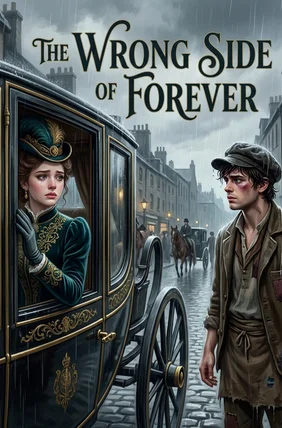
Katarina's mother is gone. The study ransacked, the safe forced open, no note, no explanation, no one treating it with the urgency it deserves. Everyone around Katarina is staying
Katarina is the kind of heroine the nineteenth century did not write. Her mother is missing, the investigation is going nowhere, and the man she suspects is connected to the disappearance happens to be the brother of the man she is also drawn to. The previous century would have used her as a vessel through which her family's tragedy resolved itself. This book lets her run the investigation. She is the agent, not the victim of the plot. The forbidden-love dimension is real but it is not the engine. Her decisions are.
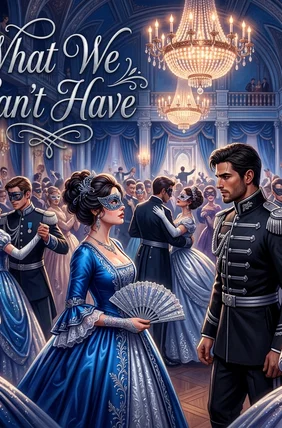
Fleur is a violinist who was traded to Henrik Devereux by her father to settle a debt, and Maplewood Manor looks like every gothic novel she ever read. Henrik is reclusive in a way
What We Can't Have is a deliberate Gothic. Maplewood Manor, the older reclusive lord, the violinist daughter traded by her father to settle a debt, the rooms she is not supposed to enter. Every line in the setup is a direct echo of the form the Brontës were working inside. The difference, again, is the grammar. The book opens with Fleur already wandering the manor she is not permitted to wander. She is not destroyed by curiosity. She is the reason the plot moves.
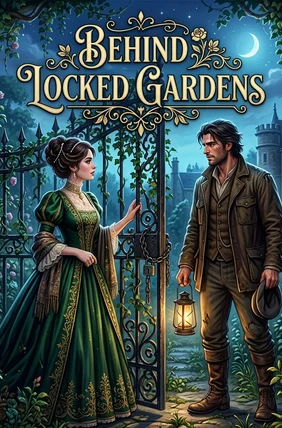
Mirabel married Victor Van Derlyn to save her family's vineyard and she has no illusions about what the deal cost her. He is decades older, controlling in the way of men who buy wh
The book is the Bovary setup detailed earlier. Mirabel has made her peace with the bargain when a man arrives claiming to be the brother she was told had vanished. Emma Bovary, given that opening, would have left the bargain and the book would have killed her. Behind Locked Gardens lets Mirabel keep her clarity, her family, and her future. The Bovary setup is allowed to land somewhere other than arsenic.
Where to find these
The punishment canon and the counter-canon, with search shortcuts:
- The Scarlet Letter — Nathaniel Hawthorne
- Madame Bovary — Gustave Flaubert
- Anna Karenina — Leo Tolstoy
- Tess of the d'Urbervilles — Thomas Hardy
- Lady Chatterley's Lover — D.H. Lawrence
- Jane Eyre — Charlotte Brontë
- Wuthering Heights — Emily Brontë
- The Age of Innocence — Edith Wharton
- The Awakening — Kate Chopin
- Rebecca — Daphne du Maurier
- Bound by Honor — Cora Reilly
- Twisted Love — Ana Huang