Reading Vampire Romance Before Twilight: A Survival Guide
The 90s and early 2000s vampire romance scene was darker, weirder, and a lot less sparkly. Here's where to start.
If you came to vampire romance through Twilight in 2005, The Vampire Diaries in 2009, or True Blood somewhere in between, you arrived in the middle of a renovation. The genre had been quietly rebuilt to suit a younger reader: smaller stakes, cleaner heroes, less actual blood.
What had existed before, and there was a lot of it, operated on different assumptions.
This is a guide for the reader who has finished every romantasy series with vampire heroes in 2026 and is wondering where the genre actually came from.
The answer is mostly the 1990s and early 2000s, when vampire romance was darker, weirder, more sexually unbothered, and a great deal more interested in the question of immortality than in whether the heroine's parents would approve of her boyfriend.
Treat this as field equipment. There are some genuinely strange books in the back-catalogue. Some of them are better than anything modern PNR has produced in twenty years. Others have aged in ways that will require the modern reader to do some translating.
Here is how to start.
How the genre changed in 2005
Two events shifted vampire romance overnight: Twilight's 2005 publication, and the realization, within about eighteen months, that there was a multi-billion-dollar YA market hungry for paranormal love stories that did not feature genuinely disturbing content.
Before this shift, vampire romance lived primarily in two categories.
Adult paranormal romance, which by 2005 already had Christine Feehan's Carpathians, Sherrilyn Kenyon's Dark-Hunters, and J.R. Ward's Black Dagger Brotherhood arriving just in time at the end of the era.
And urban fantasy with strong romance subplots, where Laurell K. Hamilton's Anita Blake and Charlaine Harris's Sookie Stackhouse had been running for years.
What these older books all assumed was a reader who had no problem with sex, no problem with violence, and no problem with a hero who had been alive for several centuries and had behaved accordingly.
Twilight introduced, quite deliberately, a vampire who had been alive for a hundred years and had behaved like a virginal Mormon teenager. The contrast tells you most of what you need to know.
If you find yourself wishing modern vampire romance had more weight — heavier stakes, heavier consequences, a hero who has actually been a vampire for the length of time the book claims — pre-2005 is where you want to look.
Twilight introduced, quite deliberately, a vampire who had been alive for a hundred years and had behaved like a virginal Mormon teenager.
The literary canon (start with Anne Rice)
Anne Rice's Vampire Chronicles are the foundation of every modern romantic vampire mythology, and the most important fact about them is that they are not technically romance novels.
They are dark fantasy with intensely homoerotic and bisexual undercurrents, set in a baroque universe of vampire politics. The romance is mostly between the vampires themselves. Lestat and Louis. Lestat and Marius. Lestat and Armand. Lestat and everyone.
This matters because every modern brooding vampire (every Edward, every Damon Salvatore, every Eric Northman) is a descendant of Lestat.
The aesthetic vocabulary, the moral ambivalence, the "I am a monster who loves you anyway" speech: Rice wrote it first, and she wrote it better.
Read in this order:
- Interview with the Vampire (1976). Establishes the world.
- The Vampire Lestat (1985). Turns the world inside out from Lestat's perspective. This is the book that made him an icon.
- The Queen of the Damned (1988). The genre's most ambitious novel, attempting to explain the entire origin of vampires across human history. Mostly succeeds.
The 1994 Interview film with Cruise and Pitt got most of the aesthetic right and most of the queer politics wrong. The books are richer.
The paranormal romance template
If Anne Rice gave the genre its literary vocabulary, Christine Feehan gave it its romance template.
Dark Prince (1999) launched the Carpathians, a near-vampire species whose males turn evil if they do not find their "lifemate", a single woman whose touch restores their soul.
The fated-mate, the centuries-old hero, the rescue-by-being-claimed: Feehan codified all of it.
The Carpathians series now runs to over thirty books and has sold across many millions of copies. The early entries — Dark Prince, Dark Desire, Dark Gold — are where the formula was set, and they remain the clearest illustration of why paranormal romance works as a category.
Sherrilyn Kenyon's Dark-Hunter series, starting with Fantasy Lover in 2002, ran the same template through Greek mythology. Immortal hunters cursed by gods, fated to find their soul-redemption in mortal women.
Pace and worldbuilding are sharper than Feehan's; the dialogue is faster, the heat is comparable.
These are the two writers who built the structural template that Twilight later inherited and softened. Read either to understand where the modern fated-mate vampire actually came from.
The urban fantasy turn
The other major stream of pre-Twilight vampire writing came from urban fantasy, which solved a problem pure paranormal romance had: how to have a vampire hero in a contemporary setting without the world noticing.
Laurell K. Hamilton's Anita Blake series, beginning in 1993, made the protagonist a vampire executioner. A state-licensed necromancer-cop who hunted rogue vampires for a living and ended up sleeping with several of them.
The early books (through about The Killing Dance) are tight noir-paranormal procedurals with serious romance.
Hamilton later took the series in a famously erotic direction that purists either loved or fled. Your mileage will vary.
Charlaine Harris's Sookie Stackhouse series, starting with Dead Until Dark in 2001, imagined a world where vampires had "come out": declared themselves to humanity, demanded civil rights, started running for office.
The romance is between a Louisiana waitress with telepathy and a Civil-War-veteran vampire who has been undead longer than her grandmother has been alive.
The series ran for thirteen books, was adapted as HBO's True Blood, and remains the most thoughtful "what if vampires existed in modern society" any writer has produced.
Both series treat the vampire as a person with history and political position. Modern paranormal romance, with rare exceptions, does not.
The countdown to Twilight: J.R. Ward, 2005
In April 2005, six months before Twilight would land on shelves, J.R. Ward published Dark Lover, the first novel in the Black Dagger Brotherhood.
The series imagined a warrior-brotherhood of aristocratic vampires defending their species against an immortal enemy in a world that was, otherwise, recognisably contemporary America.
What Ward did, and what every alpha-vampire romance has imitated since, was synthesise the previous decade into a single formula. Anne Rice's gothic mythology. Feehan's fated-mate. Hamilton's urban setting.
The result was the romance equivalent of the Avengers: every previous answer to "what is a romantic vampire" stacked into one universe, with the heat dial turned to ten.
The early Brotherhood books, Dark Lover through Lover Awakened, are the high-water mark of pre-2005 vampire romance. If you read nothing else from the era, read these.
Most modern indie vampire romance is still trying to do what they did, with less commitment.
What to skip (or read with a translator's eye)
A few cautions for the modern reader.
The 90s and early 2000s wrote attitudes toward sex, gender and consent that the genre has since moved past, sometimes quietly and sometimes with industry-wide revision.
Some books treat dubious-consent as a given rather than as a trope with content warnings. Others use racial or queer characters in ways the era thought were progressive and the 2020s does not.
This does not mean the books are unreadable. It means you should read them with the cultural distance you bring to a 90s film: aware of the era, willing to translate, not surprised when something lands wrong.
The most enduring books — Rice, the earliest Carpathians, the early Sookie — generally hold up. The midlist of the period, particularly indie erotic vampire novels that proliferated between 2001 and 2004, requires more selectivity.
Where to actually start
If you have time for one book, read *Anne Rice's The Vampire Lestat***. It is the genre's foundation, written by a major novelist, and it will give you reference points for everything else.
If you want paranormal romance proper, with fated mates, possessive heroes, and contemporary stakes, start with *Christine Feehan's Dark Prince or J.R. Ward's Dark Lover***. Both will feel familiar to a modern romantasy reader.
Both will also reveal what modern paranormal romance has misplaced over the last twenty years.
If you want urban fantasy with vampires-as-citizens, start with *Charlaine Harris's Dead Until Dark***. It is shorter, smarter, and gentler than its reputation suggests.
If you want the original myth-deep gothic, go to *Bram Stoker's Dracula (1897) and John Polidori's The Vampyre*** (1819). Both are short. Both established the template that every vampire writer for the next two centuries has been arguing with.
You will, after a few weeks of this reading, find modern vampire romance both more legible and slightly diminished. That is the point of going back.
The genre had a longer memory than the BookTok timeline knows, and once you have seen it, you cannot quite unsee it.
If you want this aesthetic in 2026
The pre-Twilight register has not entirely lost the thread. A handful of writers are still doing the clan-politics-and-immortality combination that the older series committed to, with none of the YA-era sanitisation.
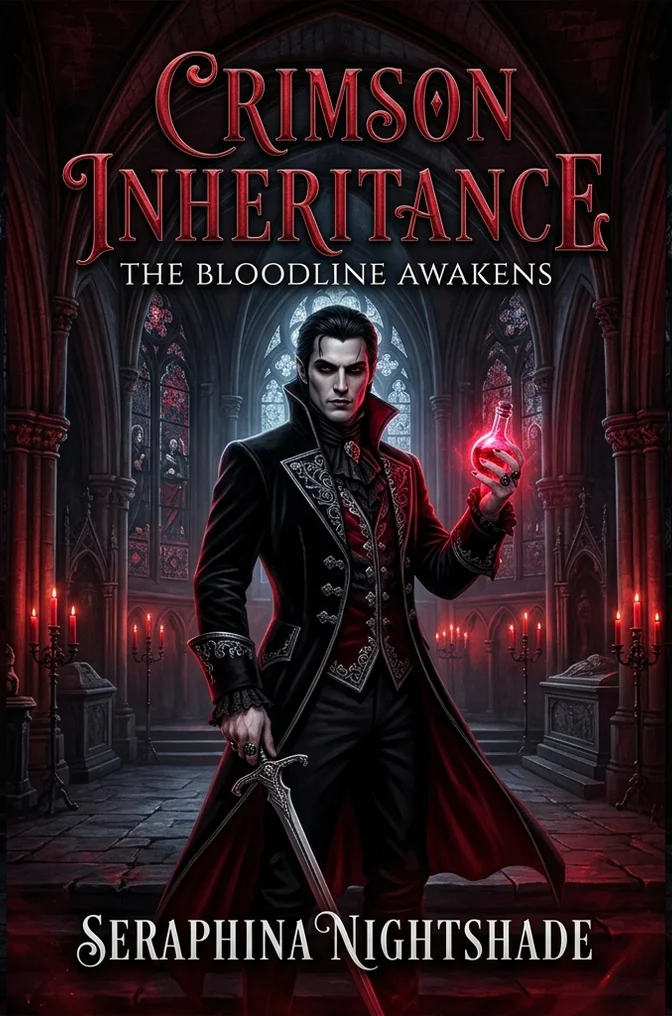
Valerian Lancaster wakes up to find that everything her family built their power on has been stolen overnight. Without it, her dynasty falls. Every rival clan in the city already k
A vampire dynasty in slow collapse, a stolen artefact, a rival clan circling, and the suspicion that the betrayal came from inside the house.
Reads like the politics-heavy stretches of Sookie Stackhouse crossed with the inheritance-and-succession plotting that Queen of the Damned did so well.
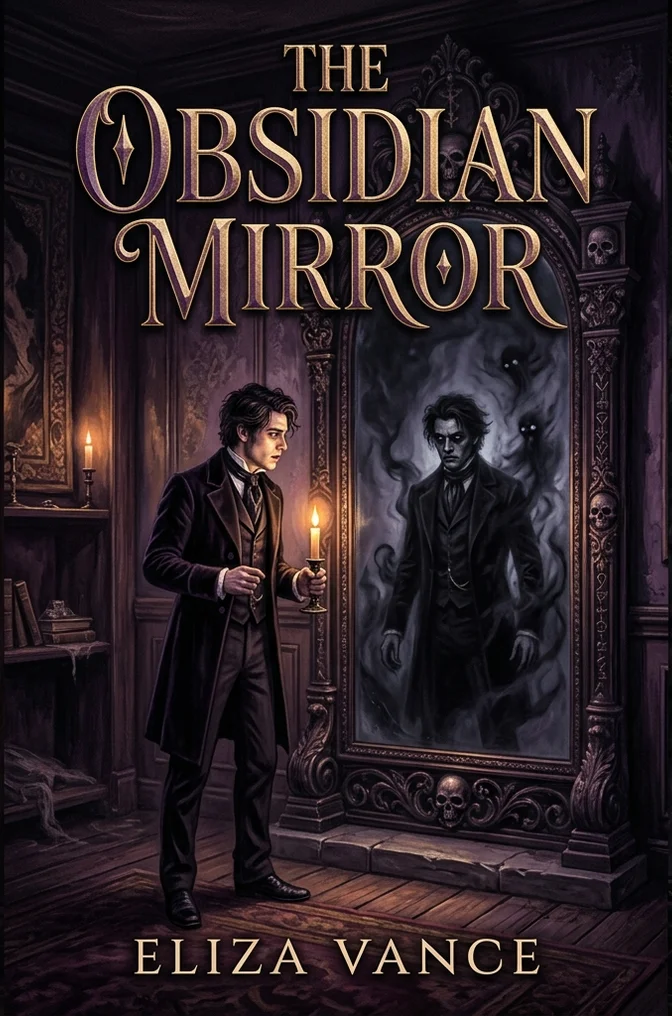
Ignatius inherited Blackwood Manor from a family he never knew existed. Strange enough on its own. Stranger still is that his reflection started vanishing before he finished unpack
This one leans gothic-horror over romance. Inherited manor, vanishing reflection, a bargain made centuries ago by an ancestor who is no longer in a position to be asked about it.
The aesthetic vocabulary is straight out of the Rice / Stoker lineage. Read it if "Blackwood Manor" is the kind of phrase that already makes you reach for a book.
Where to find these
All of the recommendations above are still in print, on Kindle, or in any decent public library. For quick lookups:
- Interview with the Vampire — Anne Rice
- The Vampire Lestat — Anne Rice
- The Queen of the Damned — Anne Rice
- Dark Prince — Christine Feehan
- Fantasy Lover — Sherrilyn Kenyon
- Guilty Pleasures — Laurell K. Hamilton
- Dead Until Dark — Charlaine Harris
- Dark Lover — J.R. Ward
- Dracula — Bram Stoker
- The Vampyre — John Polidori