9 Fae Romances Book Took Won't Stop Recommending
Nine fae romances ranked from safest to most demanding, for when Blood and Ash ends and BookTok (or book took) owes you a replacement obsession.
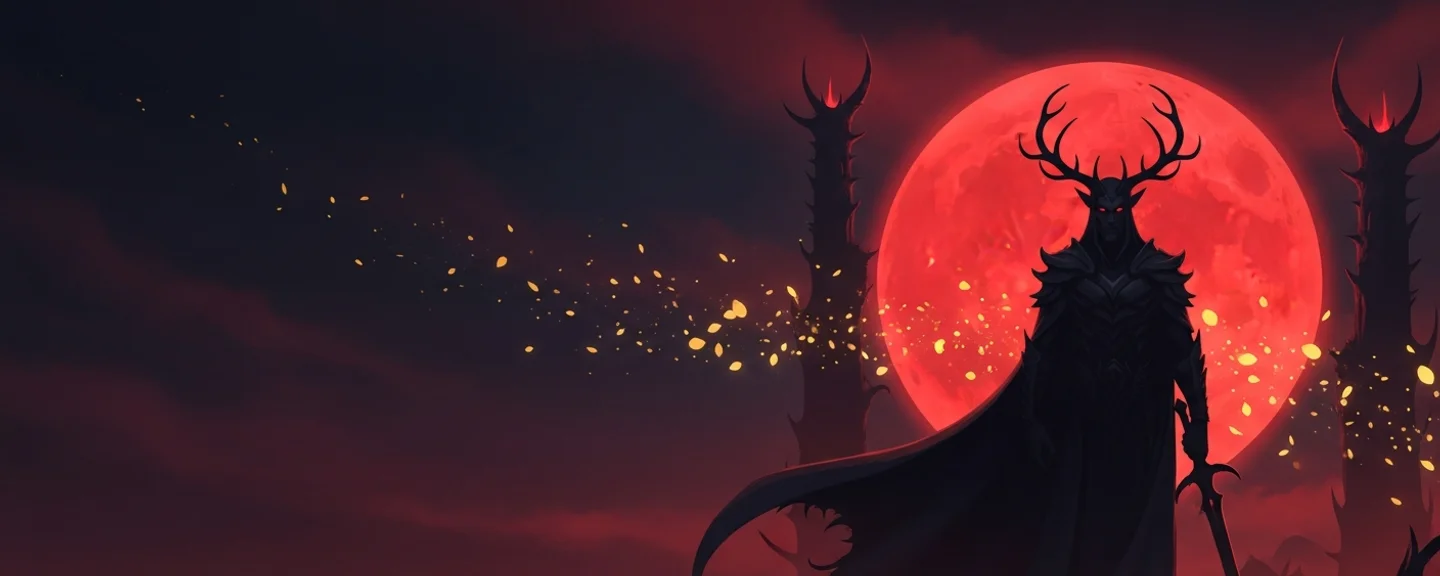
The Blood and Ash series ends this year. The Throne of Bone and Ash drops in 2026, the seventh and final book, and Jennifer L. Armentrout has been quiet about it the way she’s never quiet about anything, which means it’s going to gut us. Poppy and Casteel get their last chapter. The Atlantians get their last battle. You get one more cover reveal and then nothing.
So now what.
You can sit with the grief like a normal person, or you can do what BookTok (or "book took," depending on how fast your thumbs were typing) has been doing for months: building the post-FBAA TBR. Every fae replacement obsession in one place, ranked, with receipts. I’ve read all nine. Some of them earn the comparison. Some of them earn it on a technicality. One isn’t even fae but scratches the exact same itch and you’d be a coward not to include it.
Here they are in the order I’d hand them to you, from safest landing to most demanding. #1 is the bullet you bite if you want the closest equivalent. #9 is for when you’re ready to graduate past candy fae and want something that will sit on your chest like a real book. Everything between is your sliding scale.
Ranking is the argument. Don’t @ me about #5.
---
A Court of Thorns and RosesSarah J. Maas
The obvious one. The one your three best friends already told you about. The one BookTok declared a federal offense to not have read by now. Yes, it’s still the closest landing zone after Blood and Ash, and yes, you should read it before you read anything else on this list.
Same chassis: a young woman thrown into a fae court she doesn’t understand, the dark hero who looked like a villain in Book 1 and is the love of her life by Book 3, the politics that turn into wars, the slow-burn that takes 1,200 pages and earns every minute. ACOTAR is hornier than FBAA, slightly less polished, and has worldbuilding that gets bigger every book the way Maas worldbuilding always does.
What it does differently: Rhysand isn’t morally grey. He’s a beautifully written, deliberately compromised love interest who Maas wants you to root for from the moment you meet him. Casteel makes you earn it. If you liked having to fight for Cas, ACOTAR will feel slightly easier. That’s a feature, not a bug.
Earns the comparison. Start here.
---
A Shadow in the EmberJennifer L. Armentrout
You may not know this exists. A lot of FBAA readers don’t, which is criminal because it’s literally the same author writing the same universe.
A Shadow in the Ember is Book 1 of the Flesh and Fire series, set 800 years before Poppy was born. Different protagonist (Seraphena, who is wonderful), different stakes, same gods, same Atlantia, same political machinery. If you read FBAA and thought "I want to live inside this world for another nine books," this is the door.
What it does differently: it’s heavier on the gods. The FBAA series treats Atlantian theology as flavor; Flesh and Fire makes the gods main characters with skin in the game. Some readers say it’s slower; I’d argue it’s denser. If you skim, it’ll feel slow. If you read it like a grown-up, it pays.
The fastest, safest grief replacement. Read this second.
---
The Plated Prisoner SeriesRaven Kennedy
This is the one that gets you in your gold-cage feelings.
Gild opens with Auren, the gilded favorite of a king who keeps her behind a literal golden fence. It’s a slow burn, a slow build, and a slow burn-it-all-down. Six books. Closed series. You can binge it without waiting for an author to finish.
What scratches the FBAA itch: power asymmetry that the heroine refuses to accept as permanent, a hero who shows up violent and gets earned slowly, world politics that escalate book by book. What’s different: Kennedy writes lyrical-purple prose. Either you love it or it bounces off you in the first chapter. There is no in-between. If lyrical-purple isn’t your thing, skip to #4 and don’t write me a review.
If lyrical-purple IS your thing, this might be the one you reread the year you turn thirty.
---
The Serpent and the Wings of NightCarissa Broadbent
### For the Book Took Fandom That Wants More Bite
This is where the BookTok algorithm dumped half its FBAA refugees in 2024, and the algorithm was right.
Crowns of Nyaxia is vampire blood politics done with a straight face. Oraya is a human raised by the king of the House of Night, entered into a deadly tournament, paired with a rival heir she’s not supposed to love. The tournament structure does what tournaments do: gives you constant escalation without filler. The romance does what romance does when the writer knows the genre. It earns its turns.
What scratches FBAA: morally complicated father figure, hero you don’t trust until you do, world built on hierarchy that the heroine refuses to accept. What’s different: it’s vampires, not fae, so the politics are colder. The blood imagery is real. If you got squeamish at the bite scenes in FBAA, halve your expectations and double the spice.
Earns its reputation completely.
#1 is the bullet you bite. #9 is for when you’re ready to graduate.
---
Fourth WingRebecca Yarros
Not fae. Dragons. Don’t fight me, I’m right.
The reason it’s on this list at #5 instead of being skipped: Fourth Wing scratches the exact FBAA itch through a different surface. A young woman who isn’t supposed to survive the system she’s thrown into. A morally compromised hero who she shouldn’t want and does anyway. A school-tournament-war structure that lets you live in the world without sagging plot. Found family. Stakes that escalate cleanly.
What it does differently: the hero is less ambiguous than Casteel. Xaden is grumpy and protective and has secrets, but his loyalties are clearer earlier than Casteel’s were. The romance is therefore easier: less anxiety, more banter. If you wanted FBAA to spend less time making you suffer, Fourth Wing’s your answer. If you liked the suffering, this’ll feel light.
Read this with your TBR brain off and your serotonin brain on.
---
Spark of the EverflamePenn Cole
The newer kid on the shelf, and the one that proves romantasy has runway left.
Spark of the Everflame is Book 1 of the Kindred’s Curse series and it moves. Mortal heroine, fae prince, palace intrigue, a magic system that rewards close reading. Cole writes faster than Maas or Kennedy, less ornate than either, and she trusts you to keep up.
What scratches FBAA: secret identities, hero who’s been lying about who he is, heroine who finds out and has to decide whether the lie was love. What’s different: the pacing. Where FBAA luxuriates, this snaps. Some readers prefer one, some the other. If FBAA’s middle felt long to you in a bad way, this is the corrective.
Earns inclusion. Doesn’t earn the top three yet, but Book 3 might fix that.
---
Throne of GlassSarah J. Maas
The longer commitment. The one that requires you to read seven novels and one prequel collection to get the full payoff.
Throne of Glass is where Maas built the muscles she later used in ACOTAR. Celaena is an assassin pretending to be someone else; the romance is slow-burn across three different love interests across multiple books, which annoys some readers and is exactly the point for others; the worldbuilding pulls together by Book 4 and pays off by Book 7 in a way that justifies the prep.
What scratches FBAA: court politics, royal lineage reveals, a heroine who is the most dangerous person in any room and still gets emotionally outflanked by the right hero. What’s different: pace. This is a chess game, not a sprint. Don’t start unless you have time to commit. Do start if you want a series where the payoff justifies the wait.
For when you have a long weekend and a strong opinion about commitment.
---
The Bridge KingdomDanielle L. Jensen
The political marriage one. The one where the heroine is sent to marry the enemy king to assassinate him from inside his court.
The Bridge Kingdom does enemies-to-lovers as enemies-to-spies-to-lovers, and the espionage layer makes the slow burn earned in a way most "she-hates-him-then-doesn’t" romances never bother to set up. Aren is the king of a kingdom that has wronged Lara’s people for generations. She is trained to seduce him, dismantle him, and walk away. That she doesn’t is the whole story.
What scratches FBAA: political marriage that becomes real, hero who is genuinely a good ruler doing morally compromised things for survival, heroine who has to decide whose history she believes. What’s different: less magic, more strategy. The fae-coded fans may want more fantasy. Readers who liked the political bones of FBAA will want exactly this.
Quiet, sharp, underrated.
---
An Ember in the AshesSabaa Tahir
The one for when you’re ready to graduate past candy fae.
Sabaa Tahir writes in a Rome-inspired empire where Laia is a slave trying to save her brother and Elias is the soldier who wants out of the army that owns him. There is romance, but it is not the load-bearing wall. It is the thing that survives inside a story about empire, complicity, and what you owe the people you love when staying alive requires harm.
What scratches FBAA: oppressed heroine, soldier hero with a divided loyalty, a regime that needs to be brought down, slow burn earned through real cost. What’s different: the prose is literary. The themes are heavy. The romance is not the point. It’s the way through to the point. If you wanted FBAA to feel more permanent in your chest, this delivers.
Read last. Read carefully. Sit with it after.
---
After the Last Page
That’s the order. Start at #1 if you want a soft landing, jump to #5 if you want banter and dragons, save #9 for the night you’re ready to feel something heavier than fae politics.
The Blood and Ash series ends this year. Poppy and Casteel get their last chapter, and you get a TBR that doesn’t pretend the loss isn’t real. Pick the one that matches the size of the hole.
Then come back and tell me which order you actually read them in. I want to know who fought me on #5.