Why the West Can Only Love a Vampire for a Decade
Every decade the West falls for a monster and disowns it within ten years. In East Asia the supernatural never arrives and never leaves. The difference is not t
Every decade or so, the West falls in love with a monster. Anne Rice's vampires in the 1990s. Stephenie Meyer's in the 2000s, after which the number of vampire novels published each year more than doubled between 2006 and 2010. Paranormal werewolves and fae through the 2010s. Romantasy's winged immortals now. And every time, within roughly ten years, the same culture that fell turns and disowns the object of its affection as juvenile, regressive, a phase. Twilight, two decades on, is remembered by many of its first readers as something to have grown out of, a series they were briefly taken in by and have since filed under teenage error.
In China, Korea, and Japan, the supernatural does not arrive and does not leave. It has no boom because it never went away to come back. Cultivation immortals, transmigrated souls, household ghosts and spirit-bureaucracies have carried East Asian storytelling for centuries and carry it still, across every screen and page. The Western feeling for the supernatural is a fever. The East Asian one is a climate.
This is a piece about why the West can only hold enchantment for about a decade before it gets embarrassed, and about what the embarrassment, which is the most reliable part of the whole cycle, says about us.
The fevera love with a half-life
The Western pattern is a wave with a shame built into its trough. A creature surfaces, a blockbuster certifies it, the market floods, and for a few years the supernatural is everywhere. Then the same readers who bought it begin to perform their distance from it. The backlash against Twilight was not only about the books. It was readers announcing they had matured past them.
This is the load-bearing fact. In the West the supernatural is consumed as a trend, and a trend is by definition a thing you outgrow. The vampire is not a permanent feature of the imaginative landscape. He is a season. Anne Rice's readers aged out of the Vampire Chronicles. The paranormal-romance shelf that swelled after Twilight thinned within a few years, its authors quietly re-shelved or rebranded. Each cohort treats its own enthusiasm as something that happened to a younger, more credulous version of itself. The genre's modern history is a sequence of these seasons, each ending the same way, each treated as a youthful indulgence the culture has now, finally, put behind it, until the next one.
The climatea supernatural with no season
East Asian storytelling cycles through its genres like anywhere else. Xianxia dramas saturate, danmei runs into state censors, individual forms tire and pass. What does not trough is the supernatural itself, because it was never the trend to begin with. It is the substrate the trends are made from. Xianxia, the genre of immortals and cultivation, draws directly on Taoism, Buddhism, Confucianism, and Chinese folk religion and is a permanent staple across television, film, web novels, comics, and games. The ghost is not a guest. In a tradition shaped by ancestor veneration and filial piety, the dead remain inside the kinship system, owed ritual and capable of reply. The operating assumption of much of the literature is that all things carry a latent spirit. The supernatural is not a genre that visits. It is the grammar the stories are written in. Consider the shape of the most popular forms. Cultivation novels run on a progression ladder, the protagonist ascending tiers of power through trials, a structure closer to a career or a credential than to a haunting. Transmigration and regression stories move a soul backward or sideways through a cosmos that is assumed to be navigable, its rules learnable, its afterlife administered. The dead keep offices. Fate keeps ledgers. None of this is recent or fringe. Pu Songling''s Strange Tales from a Chinese Studio, compiled around 1740, is built from fox spirits who cultivate toward immortality, ghosts who take lovers and file grievances, and an afterlife organized as a civil service, one tale sending a man down to the underworld to appeal his father''s sentence and finding its courts as corruptible as any earthly magistrate''s. The cosmos there is not haunted. It is administered. The supernatural here is not an interruption of the ordinary world but an extension of its logic into the regions the West marks off as forbidden.
The supernatural here is not an interruption of the ordinary world but an extension of its logic.
A caution, because the easy version of this argument is an old and lazy one. This is not the mystical East against the rational West. East Asia ran its own fierce campaigns against superstition, from the May Fourth intellectuals to Maoist modernization, and belief there is as contested as anywhere. The claim is narrower and it is about fiction. The enchanted cosmos survived in East Asian storytelling as a working system long after, and regardless of whether, anyone was required to believe in it.
The disenchantment of the worldWeber's bet, Taylor's self
The West made a different arrangement, and it made it on purpose. In 1917 Max Weber named the modern condition the disenchantment of the world: the conviction that there are no mysterious incalculable forces, that in principle one can master all things by calculation. Almost a century later the philosopher Charles Taylor, in A Secular Age, described the self this produced. The modern Western "buffered self" is sealed against a cosmos of spirits and meanings, where the older "porous self" was open to them, exposed to forces that could enter from outside.
The West did not merely stop believing in monsters. It built its modern identity on the renunciation. To be serious, educated, adult, in the Western account, is to be disenchanted. The buffered self is not a side effect of modernity. It is the credential.
The West did not merely stop believing in monsters. It built its modern identity on the renunciation.
What the shame is forthe buffered self repairs the breach
This is what the boom-and-bust is doing. A paranormal wave is a controlled breach in the buffered wall. The self lets the monster in for the specific thrill of re-enchantment, and it can only do so because the whole thing is framed as fiction, as guilty pleasure, as not-really-believed. The pleasure depends on the safety, and the safety depends on the irony.
Then the shame arrives on schedule to repair the breach. We reassure ourselves we have outgrown it, that it was a phase, that we never actually thought the world was alive. The embarrassment is not a failure of the Western love for the supernatural. It is the mechanism that makes the love permissible in the first place. You may visit the enchanted world on the condition that you agree, afterward, to be ashamed you went. This is why the Western supernatural is so often routed through the young. The teenager is the licensed believer, the figure permitted to take the monster seriously precisely because she is expected to grow out of him. Paranormal romance lived on the young-adult shelf not only for its readership but for its alibi: enchantment filed as immaturity is enchantment a serious culture can sell itself without having to account for.
The teenager is the licensed believer, permitted to take the monster seriously precisely because she is expected to grow out of him.
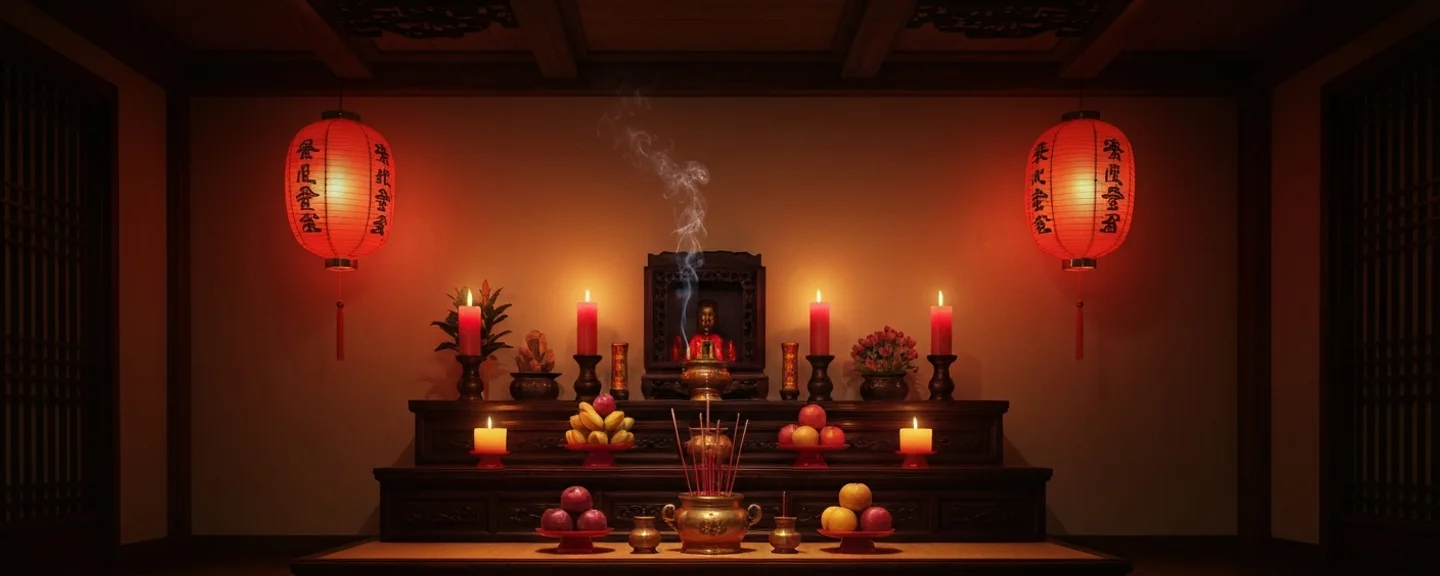
The deeper tell is in how each culture codes the supernatural. In the West it reads as a belief-claim. You either credit ghosts or you are rational, and to enjoy a ghost is to put your rationality briefly at risk, which is exactly why the rationality has to come back and reassert itself. In East Asian web fiction the supernatural reads as a system. Cultivation has tiers and trials and something close to civil-service exams; the underworld has a bureaucracy and its paperwork, a structure a reader meets head-on in Mo Xiang Tong Xiu''s Heaven Official''s Blessing, whose plot turns on the office politics of a literal celestial civil service. It is a grammar, and a grammar asks for no belief at all. You no more have to believe in qi to read a cultivation novel than you have to believe in faster-than-light travel to read science fiction. The system implicates nothing about you, so there is nothing to be ashamed of, so there is no trough. This is also why the West could import it without the usual cringe. When the same author''s Grandmaster of Demonic Cultivation, a novel of warring cultivation schools, appeared in English in 2021 it debuted on the New York Times bestseller list. Western readers bought it avidly, and they bought it the way the form invites: as a system to master and a franchise to follow, not as a creed to be caught believing. The supernatural travels fine, even here, when it arrives as a grammar rather than a confession.
What we keep outgrowingand what we bury with it
The West can love a vampire for about a decade because a decade is roughly how long it takes the buffered self to get nervous. The fever runs, the temperature breaks, the patient declares he was never really sick. It is the same move that lets a reader enjoy a dark, frightening, morally unruly book and then need, afterward, to explain that she can read it without being changed by it. The supernatural, like the transgressive, is admitted on parole.
None of this is a verdict on which culture is right. Disenchantment bought the West a great deal, and the enchanted cosmos has its own costs. The romantasy boom that produced the current winged immortals did not appear from nowhere, and it will trough like the others. The same market machinery that now manufactures romantasy to a formula will in time manufacture the disavowal, because the disavowal is what clears the shelf for the next thing. But it is worth being honest about what the trough is for.
The question was never why East Asia is so comfortable with ghosts. The interesting question, the one the boom-and-bust keeps answering, is why we are so uncomfortable that we can admit the supernatural into the room only on the condition that we promise to be ashamed of it later. The thing the West keeps outgrowing is not the vampire. It is the suspicion, which each boom briefly indulges and each backlash hurriedly buries, that the disenchanted world we staked our seriousness on might not be the only one on offer. East Asia never made that bet. So it never has to keep proving it won.