What Is Forbidden Romance? The Genre's Oldest Engine
Seven flavors of forbidden, one entry-level book per door. The trope that survives every cycle, and where to start.

Forbidden romance is the trope that survives every cycle.
Romeo and Juliet is forbidden. Heathcliff and Cathy are forbidden. The Thorn Birds is forbidden. Bridgerton runs on two hundred years of forbidden marriages and engagements, and nobody had to invent the word "trope" for any of it.
The point of forbidden romance is that the love story has to pay rent. It can''t just happen. There has to be a real reason these two people shouldn''t be together — age, family, role, history — and the reason has to cost something. Take the cost out and you have a romcom. Take the cost in and the love has to earn itself page by page.
That''s why forbidden never leaves the shelf. It doesn''t care what the rest of the genre is doing. Every era of romance reads it differently, BookTok included, and forbidden sits in the middle of every chart anyway.
Below: seven flavors of forbidden, with one entry-level book per door. #1 is the friendliest. #7 is the saddest. Read them in any order — they don''t depend on each other.
---

Birthday GirlPenelope Douglas
Age gap. Jordan is nineteen and ends up living with her boyfriend''s father, Pike, after her own family situation falls apart. Pike is a contractor, a single dad, and a man whose life does not have room for falling for his son''s girlfriend.
What makes age gap the friendliest forbidden trope is that the barrier is clean. Neither character is wrong. Neither is corrupt. The clock is the antagonist. Jordan can see the problem. Pike can name it in one sentence. That''s why this book is gentle to start with: there''s no moral mess underneath, just two people who chose the same wrong thing slowly.
Penelope Douglas writes Pike as someone who knows exactly what he''s doing and does it anyway, because the alternative is to spend twenty years pretending. Jordan does the same on her side. The chemistry doesn''t feel cheap.
If you''ve never read a forbidden romance before, this is the door. Soft landing, real heat.

Twisted LoveAna Huang
Brother''s best friend. Alex Volkov is closed-off, ambitious, and has been in love with his best friend''s little sister Ava for years. When her brother goes overseas, Alex is the one watching out for her. He''s not supposed to act on it. He acts on it.
Brother''s best friend is the low-stakes door into forbidden. The risk is one friendship, not a career or a community. That''s why this trope reads breezier than the rest. The cost is real but bounded. You can sit with the transgression without anything heavier collapsing around it.
Ana Huang built the Twisted series on this calibration. The dynamic is technically possessive — Alex is intense — but the violence dial stays low and the contemporary setting is everyday. If you came from the romcom shelf and want to step toward forbidden without committing to anything darker, this is your bridge.
Three more books in the series if you binge.
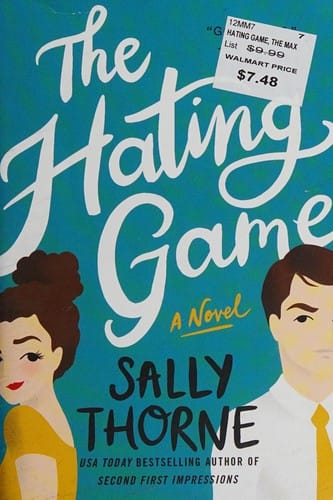
The Hating GameSally Thorne
Boss-employee. Lucy Hutton and Joshua Templeman are executive assistants at facing desks inside a publishing house that merged two of their imprints into one office. They both want the same promotion. They have hated each other for almost two years. They are also each other''s only company, all day, every day.
Boss-employee romance has a feel that no other forbidden trope shares: claustrophobia. The institution does the policing for you. Nobody has to find them out — they have to sit across from each other on Monday morning whether they wanted to or not. Every cup of coffee becomes a referendum on the rule they''re breaking.
Sally Thorne writes it with comic precision. The romance is brisk, the workplace is unfunny, and the chemistry simmers exactly long enough that you''re relieved when it tips. This is the most rereadable book on the list.
Pick this up if you want forbidden with banter, not angst.
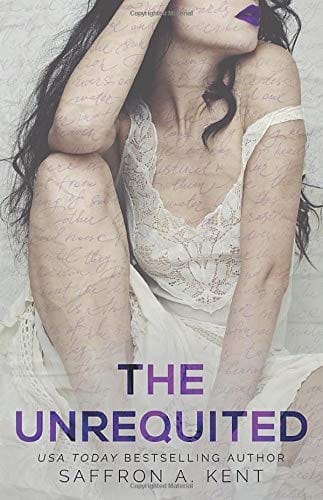
The UnrequitedSaffron A. Kent
Professor-student. Layla is a college student at a small Northeastern liberal arts campus. Thomas Abrams is her literature professor. He''s married. He has institutional power over her grade. He is, on paper, the worst possible person for her to want, and she wants him anyway.
Professor-student goes harder than the first three doors. The stakes are uneven: Thomas can lose his job, his marriage, his reputation, his career. Layla risks an A. Saffron A. Kent doesn''t flatten that asymmetry, and the book is better for it. She lets the imbalance be visible, and asks you to read about it without trying to make it fair.
This is the trope where forbidden starts to feel real. The architecture of academia — semester deadlines, office hours, grading — does most of the work, and the writing keeps the consent thread visible the whole way.
Forbidden romance is the trope that survives every cycle. It''s how the genre keeps itself honest.
Read this when you''re ready for the engine to cost something.
The BodyguardKatherine Center
Bodyguard-protectee. Hannah Brooks is executive protection. Jack Stapleton is a movie star with a stalker. The agency assigns her to him. She ends up posing as his girlfriend while they visit his family in Texas, where his brother lives, where the grief lives, and where the threat eventually shows up.
The forbidden engine here is functional. The job needs distance. The fake relationship needs intimacy. Hannah can''t do her work properly if she''s falling for the client, which means the closer they get, the worse she protects him. Every kiss costs operational competence.
Katherine Center stacks the engine with fake-dating, family grief, and a dog, but the core dynamic is single-purpose and clean. Bodyguard romance is the rare forbidden where the prohibition is built into the protection itself.
Read this for a forbidden book that''s also funny. Center balances both.
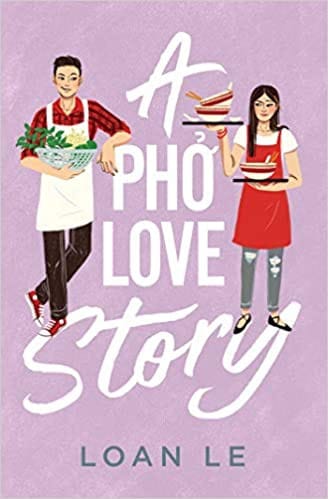
A Pho Love StoryLoan Le
Star-crossed (family feud). Bao Nguyen and Linh Mai grew up across the parking lot from each other. Their Vietnamese-American families own competing pho restaurants in Orange County. The families do not speak. The grievance started before either kid was born, and nobody''s parents have done anything to soften it since.
Star-crossed forbidden is the deepest version of the trope, because the prohibition isn''t between the two of them — it''s the community they both belong to. Falling in love means choosing against the people who raised them, the recipe they grew up on, the silence their parents have maintained for twenty years.
Loan Le writes both families with full sympathy, which is what makes the book work. If the feud were cartoonish, the choice would be easy. It isn''t. Bao and Linh have to figure out who they want to be at the same time they''re figuring out what they want.
This is the book on the list with the most heart. YA, but doesn''t read younger than it has to.
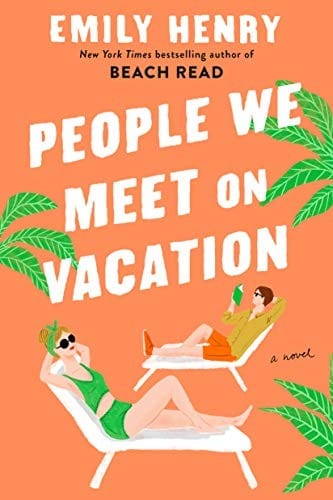
People We Meet on VacationEmily Henry
Second-chance reunion. Alex and Poppy have been best friends for ten years. They take one trip together every summer. Two summers ago, on the trip to Croatia, something happened, and they stopped talking. The book opens with Poppy texting Alex to ask if they can take one more vacation together.
He says yes.
Second-chance romance is forbidden''s most underrated flavor. The barrier isn''t a present rule. It''s the past. Both characters have changed in two years, but the wound hasn''t. Whatever broke between them on that last trip is still broken on this one.
Emily Henry writes the past without softening it. The falling-out wasn''t cute. The silence wasn''t funny. Alex and Poppy have to admit, slowly, what actually happened — and then figure out whether the new versions of themselves could survive it not happening again.
This is the saddest book on the list. It''s also the most quietly hopeful. Read it last.
---
Seven doors. Each one asks the same question — what does it cost to want this person you shouldn''t — and answers it differently.
If you finish #7 and want to read forbidden when it gets darker, Carmen Hollis wrote about reading the genre without apologising for it. I''d start there.